
The Language We Gave Skin

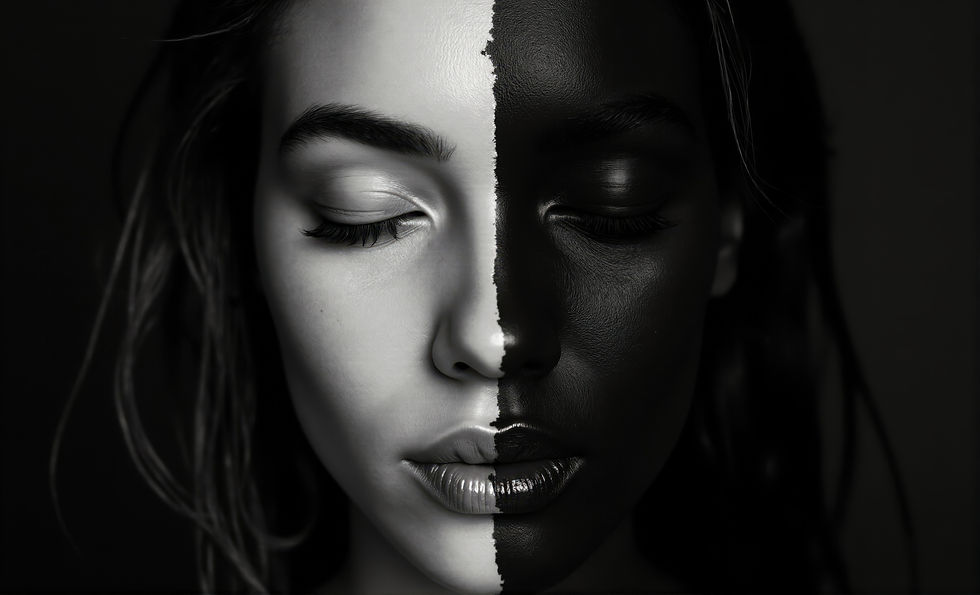
A child does not arrive in the world knowing what skin means.
They see faces.
Eyes.
Smiles.
Hands reaching toward them.
They do not know that somewhere, long before they arrived, we created meanings for the different shades covering those hands.
We did that.
And then, generation after generation, we handed those meanings down.
Some loudly.
Some so quietly we stopped recognizing them as lessons at all.
A comment overheard from the front seat.
A neighborhood described with a certain tone.
A purse pulled closer.
A name that changes the assumptions we make about the person who carries it.
A joke nobody interrupts.
A warning about those people.
A door opened for one person and watched more carefully when another walks through.
This is how prejudice can survive even among people who would never describe themselves as prejudiced.
It doesn't always announce itself as hatred.
Sometimes it arrives disguised as instinct.
Something just didn't feel right.
But instinct has teachers too.
And perhaps one of the hardest questions we can ask ourselves is:
Who taught me what to fear?
Because skin never said who was dangerous.
Skin never said who was intelligent.
Skin never said who belonged.
Skin never said who was worthy of trust, tenderness, opportunity, protection—or grace.
We did.
We gave color a language it never had.
Then we became so fluent in it that sometimes we forgot we were the ones who wrote it.
And that may be why racism is so difficult to uproot.
We keep looking for it only in hatred.
In slurs.
In violence.
In the unmistakable moments that allow us to point toward someone else and say, There.
That's racism.
But what about the quieter places?
The assumptions.
The discomfort.
The expectations.
The conclusions reached before a person has said a single word.
The moments when skin enters the room before the human being does.
Those are harder to confront because they ask something more of us than outrage.
They ask for examination.
Not simply:
Am I a good person?
But:
What have I learned to see?
And where did I learn it?
Maybe that is where change actually begins.
Not by pretending we don't see color.
We do.
Human beings are beautifully different.
The problem was never that we noticed.
The problem was what we decided the noticing meant.
Dark skin was never a threat.
Light skin was never a virtue.
Brown skin was never a border.
None of us arrived carrying the meanings that would eventually be placed upon our bodies.
We inherited them.
But inheritance is not destiny.
What was taught can be questioned.
What was handed down does not have to be handed forward.
And perhaps that is the responsibility of every generation:
to decide which things deserve to become inheritance—
and which things should end with us.
Because somewhere a child is still learning how to see another human being.
Watching us.
Listening to us.
Learning from what we say.
And from what we don't.
Skin never told that child what another person's color meant.
We will.
The only question is—
what will we teach them?


